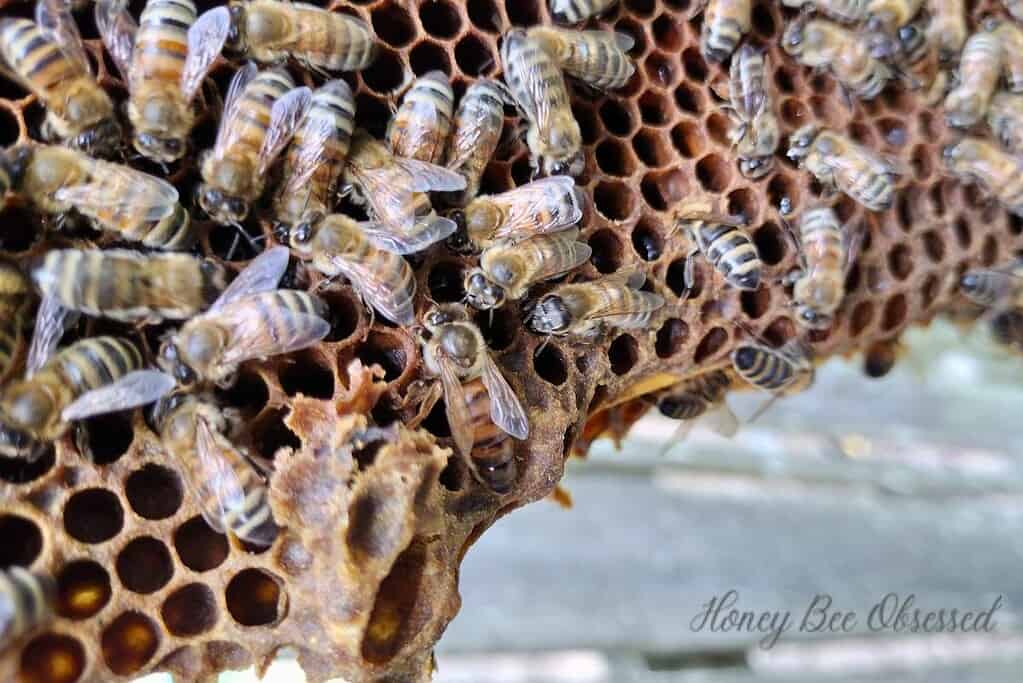
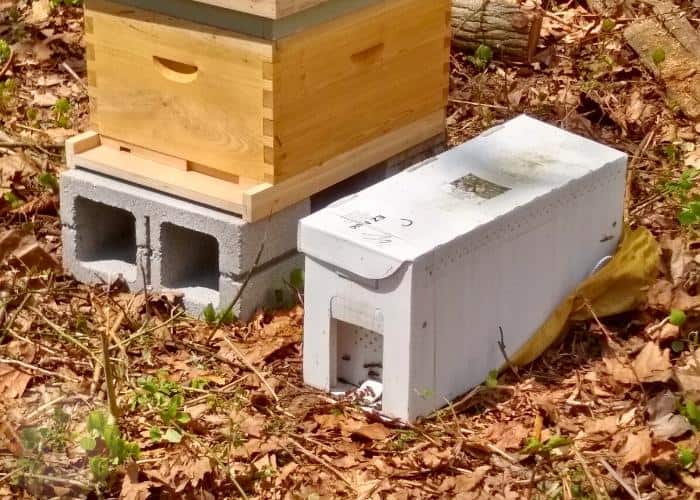
I know I cover how to install a nuc in Nuc Colony vs Package Bees, but I think this process is so important that it’s worth covering in more detail.
Every year, I see so many people wonder why their recently installed nuc already swarmed.
A nuc is a small, established nucleus colony of bees. It is typically a five-frame deep box of bees. It should include a laying queen, three frames of brood, and two frames of resources, which means frames of honey and pollen.
Why do these nucs swarm prematurely?
They’ve run out of room.
But how–there were plenty of empty frames??
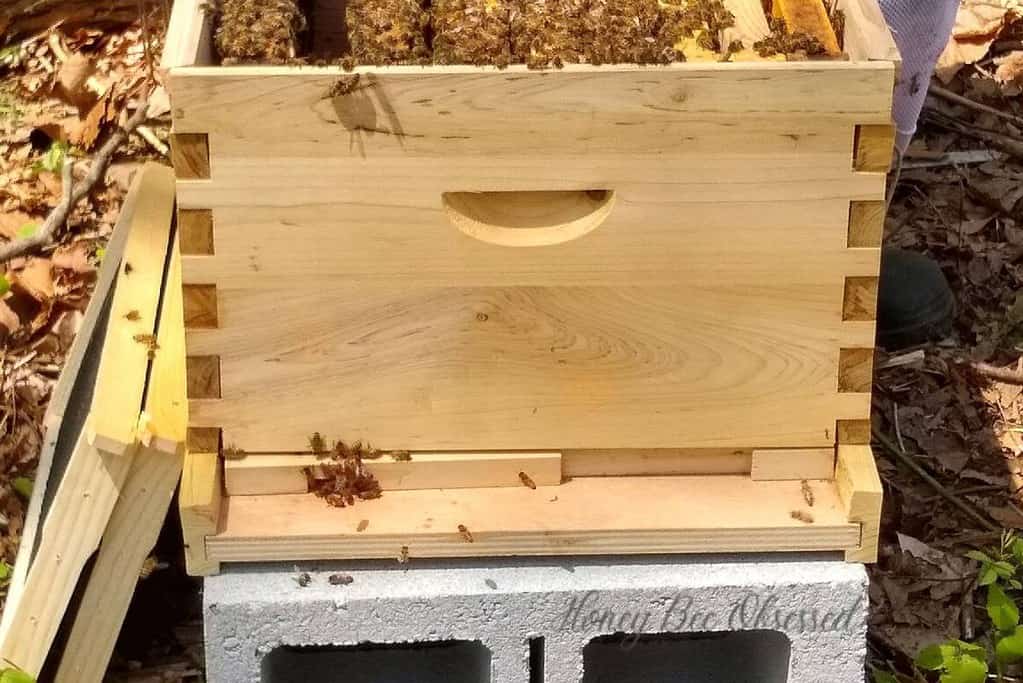
It’s a common mistake for beginning beekeepers to install the 5 frame nuc into their beehive in the exact same arrangement as they came: three brood frames in the center, and a resource frame on each side of the brood.
And for most beginning beekeepers, they don’t have drawn comb, so naturally, they fill the rest of the box with waxed frames, thinking that the bees will naturally draw out all of the new frames.
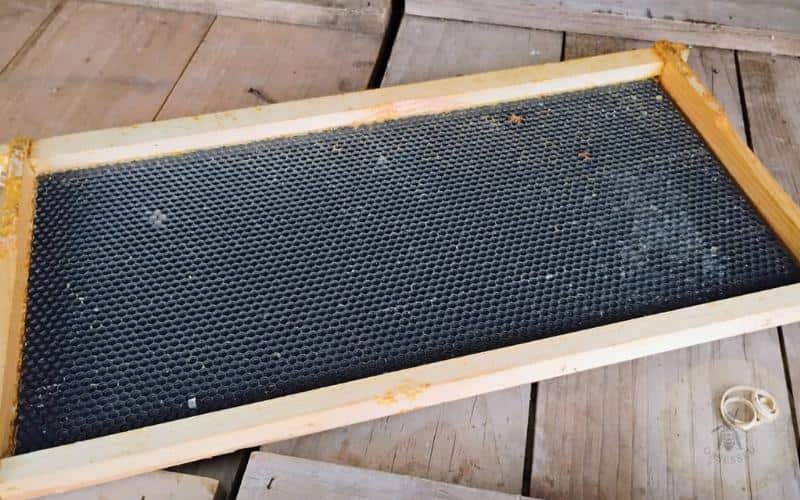
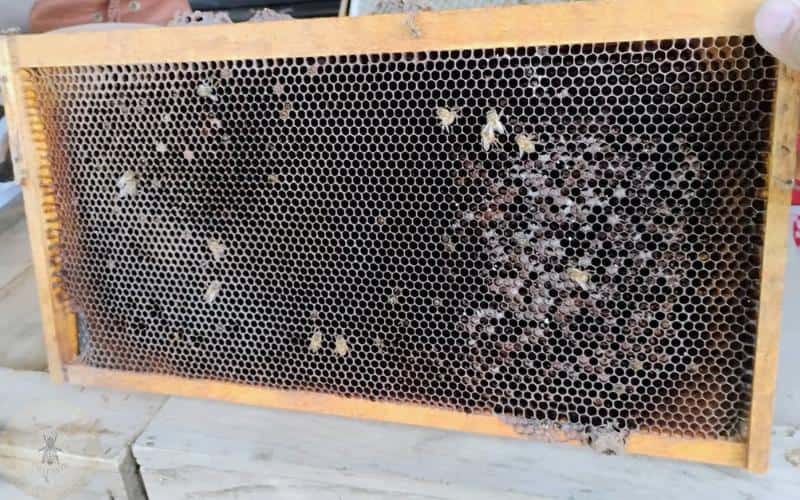
BUT…honey bees don’t tend to go out of their way to cross the resource frames to draw comb. So without drawn comb, they begin to think they’ve run out of room. And then they swarm, and you lose your new colony of bees.
So what you need is to intervene by using a cheat code that helps you to avoid this problem.
How Do You Get the Bees to Draw Comb?
Bees will tend to draw comb on a frame of foundation next to open brood.
So that means we’re going to place well-waxed frames of foundation next to the brood nest.
There is no such thing as too much wax on your frames. Here is a short video from my mentor on how to wax your frames.
Knowing that you need drawn comb, you have to manipulate the frames to maximize the bees’ production. If you don’t manipulate it, they’re going to draw comb, but not necessarily at the pace you want them to. Also, they may draw comb and fill it with the syrup you’re feeding them, which will cause them to run out of room.
Some people activate “checker boarding.” However, I will caution against this in the early spring due to the fluctuating temperatures. You never want to break up the brood nest when temperatures may dip on cooler days and evenings.
So, during installation, I recommend moving the resource frames that came with your hive out one position and replace these resource frames with brand new waxed frames. I also recommend filling a spray bottle with sugar syrup and spraying the face of the frames with the syrup to help encourage the bees to work the frames.
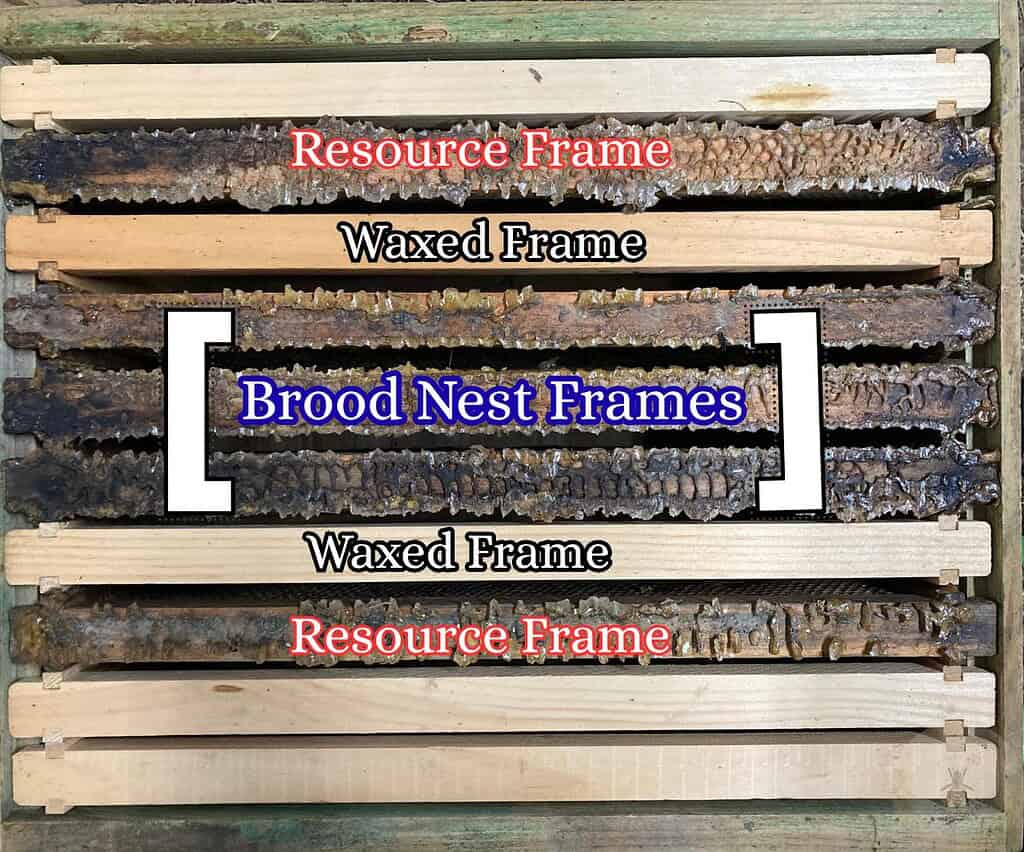
Make sure all the frames are tightly squeezed together. It’s better to leave a little space on the outside edges of the box, but not between the frames.
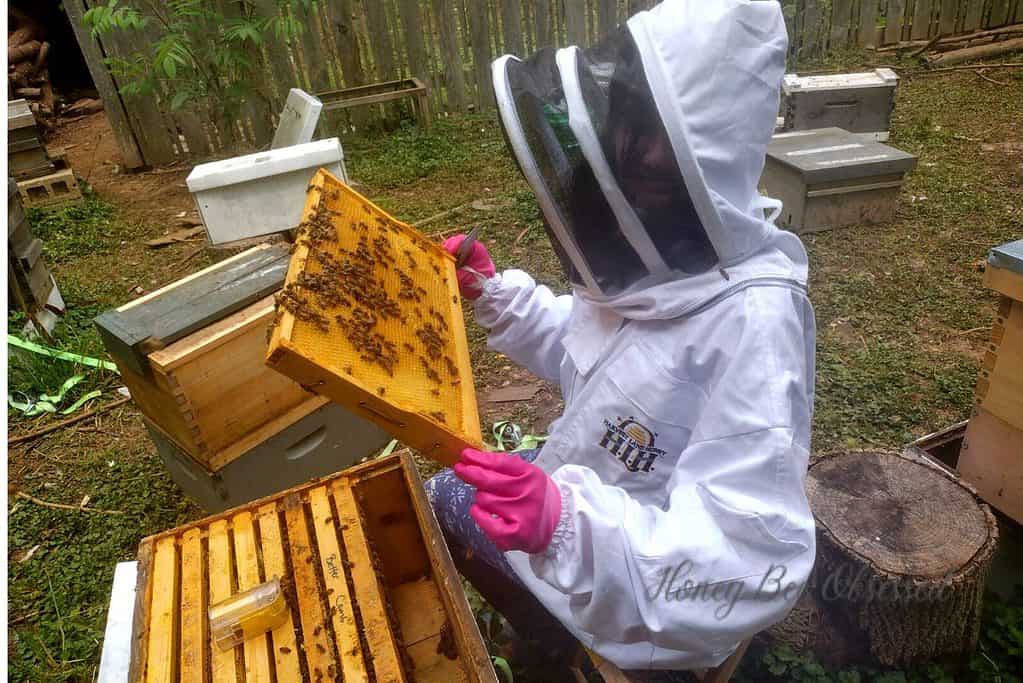
After 3 to 4 days, go back into your hive. There’s no need to perform a complete hive inspection at this point, but the waxed frames should be removed and inspected for their progress. Hopefully, they’ve begun to draw out a good portion of that frame.
If need be, you can flip the frames around so the other side is facing the brood to encourage the bees to also draw out that side of the frame.
Then you will come back again in another 3 or 4 days for your first full inspection. Hopefully, the frames are fully drawn. So now you will move the resource frames out one more position toward the outside, and have waxed frames between the drawn comb and resource frames.
The idea is you will keep working the frames outward.
You Need Drawn Comb for Winter!
It’s really important to make sure all the frames that you’re going to overwinter with have been drawn. (For example, if you plan to overwinter with one deep 10 frame box, you need 10 frames of drawn comb). You have a fairly small window to get this done.
Most of you are getting your bees from March to April, and sometimes later the further north you are. However, the bees use the summer solstice to signal winter prep. So their main timeframe for drawing comb is really in the springtime.
The further north you live, the less time you have to get the bees to draw comb. That makes these manipulations even more important.
While they won’t completely stop drawing comb after the solstice, their focus will turn to hoarding resources to survive the upcoming winter. The further past the solstice, the less inclined they will be to draw comb.
Comb Drawing Machine
**The exception to this rule will be that of a swarm. If you catch a swarm of bees, they are inclined to draw comb for you even in October. The reason is that a swarm is prepared to find a tree hollow to start anew. Before they swarm, they will have gathered resources to be able to build a new home.
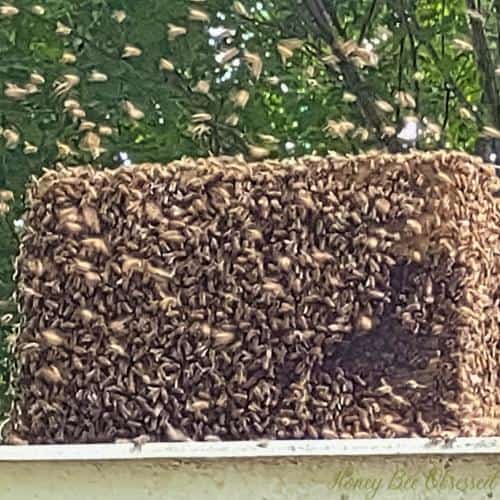
So if you want to get a lot of comb drawn, you can give a swarm a deep box of well-waxed foundation coupled with a large feeder filled with light syrup. Keep the syrup topped off. A swarm will be your special comb-drawing machine!
When you’re starting out as a new beekeeper, gathering resources for your bees should be your priority. Waxed frames are useless to the bees in the winter. Drawn comb is the most important resource for you.
Getting more drawn comb was a big focus for me, especially during my first two or three years of beekeeping. Swarms are amazing for this! You can read up on my tips on how to catch swarms. As you get into beekeeping, you may also discover the excitement of fishing and catching bee swarms!
So now you know the best tips and tricks to install your nuc in order to set yourself up for a successful first year of beekeeping!